How to Choose a Chinese Incense Supplier: 9 Checks Before You Order
Ask for the Latin species name of every aromatic material. A supplier who cannot name the species cannot tell you whether the material is legal to import, and that gap is an early compliance warning. Everything else — MOQ, lead time, packaging — is negotiable; species disclosure is not.
This is written from the supplier side, which is unusual. We make blended incense in China and sell it wholesale, so we know which questions matter. The nine checks below are the questions to use when evaluating a supplier’s transparency, document readiness and fulfilment readiness.
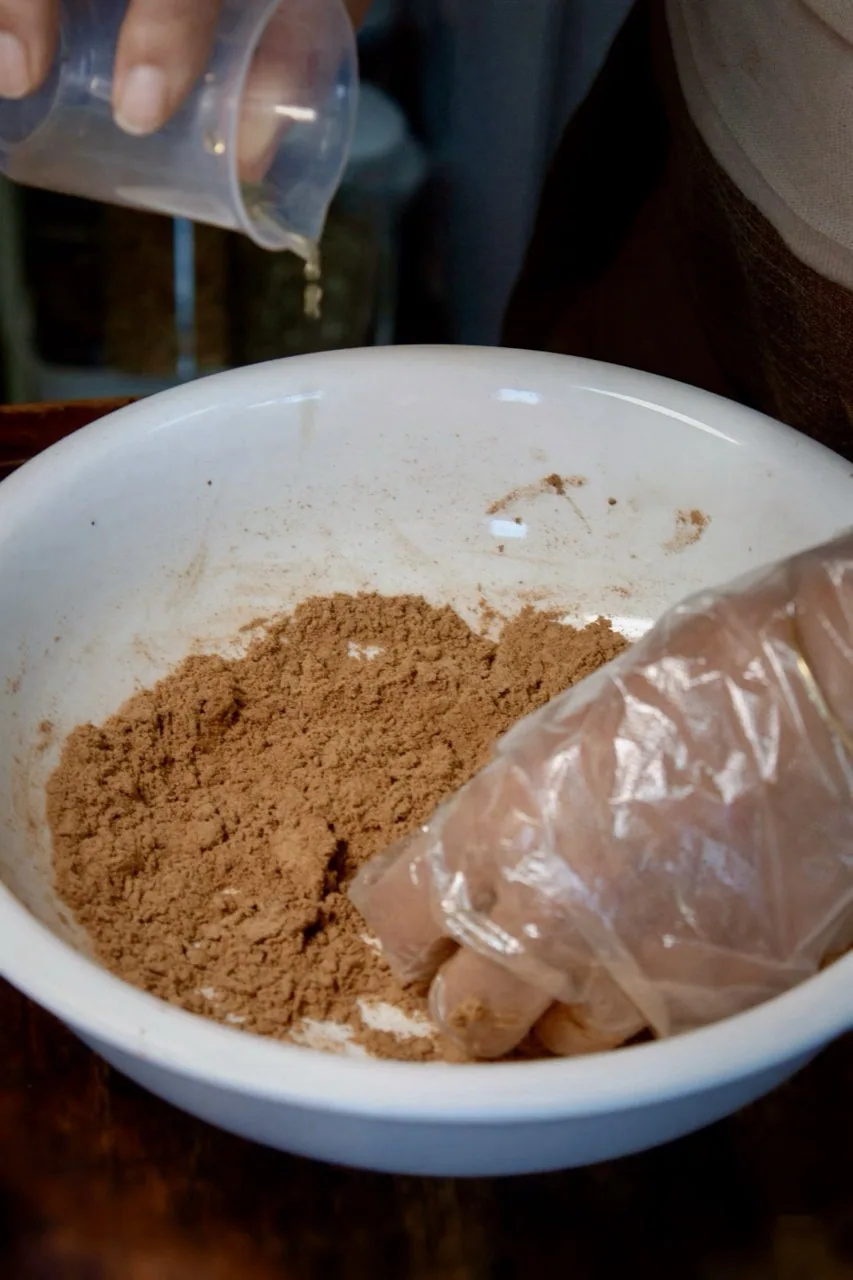 Specification starts with materials. If the material list is vague, nothing downstream can be verified.
The nine checks
1. Can they name the species in Latin?
Not “sandalwood” — Santalum album or Santalum spicatum. Not “agarwood” — which Aquilaria species, from where.
This matters because the trade name and the legal status are two different facts. Santalum album is not CITES-listed; Aquilaria species are listed in Appendix II, but whether a specific material or finished product requires a permit depends on the exact species, the form of the material and the destination country. A supplier who works only in trade names cannot tell you which one you are buying, and the answer changes both your import paperwork and your landed cost.
Ask: “What is the Latin name, and which country is the material from?” Red flag: “It is natural sandalwood, very good quality.” That is a quality claim, not an answer.
2. Can they state the CITES status of each material?
Whether a material needs a CITES permit depends on the exact species, the form of the material and the destination country — not on the genus name alone. Genera such as Aquilaria, Gyrinops, Dalbergia, Pterocarpus and Osyris appear in the CITES Appendices, but the species scope, annotations and finished-product exemptions vary, so a blanket statement that any material from these genera always requires a permit is not accurate. Based on our current consultation with the relevant authorities, our incense products are not presently expected to require a CITES certificate for export from China. Germany’s competent authority has advised that the determination of the Chinese export authority should apply. Requirements may vary by product material and destination, and we confirm the applicable documentation before shipment.
Ask: “Which materials in this formula are CITES-listed, and for the exact species, material form and destination country, what documentation do you provide?” Red flag: “Plantation, so no problem.” The answer must be per species, per material form and per destination — a blanket reassurance without naming the species is not an answer.
3. Do they disclose the binder and the full material list?
If a pressed incense product uses a binder, ask for its name, material and proportion. If a supplier will not name the binder and the proportion used, you cannot answer an ingredient question from your own customer, and you cannot check whether it is subject to any restriction in your market.
Ask: “What is the binder, and at what percentage?” Red flag: “Natural binder, no chemicals.” That is a marketing sentence. “Chemicals” is not a category.
4. Can they provide a test report?
What needs testing depends on the finished product — its components, any metal or skin-contact parts, and the destination market — and should be confirmed per SKU by the importer or a qualified laboratory.
- Lead and cadmium — potential restrictions must be assessed against the exact materials, components, article scope and destination rules; do not assume a migration test or a skin-contact trigger applies to every SKU.
- Nickel release — under EU REACH Annex XVII Entry 27, the nickel release restriction applies where a relevant part is intended to come into direct and prolonged contact with the skin.
Ask: “Do you have a test report for this exact finished product, matched to this SKU, that names the laboratory and the test scope?” Red flag: A report for raw material only, presented as a report for the finished item.
5. Is the MOQ stated per SKU and per order?
Per-design MOQ and per-order MOQ are two different fields, and each should be confirmed in writing separately.
Ask: “What is the minimum per order, and the minimum per design?” Red flag: A single “MOQ 100” with no breakdown.
6. Is the lead time quoted in working days, with a buffer?
Lead time should be broken down into its components: production days, plus finishing, plus packing, plus the shipping method’s transit time, stated separately.
Ask: “Break the lead time down: production, packing, and transit to my port.” Red flag: A single number that covers everything, with no breakdown of production, finishing, packing and transit.
7. Is the packaging retail-ready, or bulk only?
Packaging information affects whether additional re-packing is needed. Ask for: box dimensions, material, printing method, barcode/UPC handling, and whether the packaging is designed for shelf or for shipping only.
Ask: “Send a photo of the retail packaging, opened and closed, and the box dimensions.” Red flag: “We can do any packaging” with no sample and no minimum.
8. Can they show real production photos — of their own line?
Catalogue or stock imagery does not by itself verify a supplier’s own production line. Ask for a photo of the actual production step you care about: the pressing, the drying racks, the packing table, with something in the frame that dates it.
Ask: “Send a photo of the drying room this week.” Red flag: Renders, catalogue images, or photos that a reverse image search finds on three other sites.
9. Do you have a named contact and a written quote?
A written quote — with specifications, MOQ, unit price at each tier, Incoterm, lead time, payment terms and validity date — is the difference between a supplier and a chat.
Ask: “Please send this as a PDF quotation with an expiry date.” Red flag: Prices only in chat, and only “for you, special price”.
Red flags, condensed
| Signal | What it means |
|---|---|
| No Latin names, anywhere | Material identity and compliance cannot be verified |
| “No chemicals, 100% natural” as the whole specification | No specification |
| Price far below the category, with no grade explanation | The grade or specification needs explanation |
| Cannot send a production photo this week | The own-line claim remains unverified |
| Cannot state the exact species, material form, source and destination-specific documentation | Compliance cannot be verified per material and per destination — the CITES question is answerable only with these details |
| Sample and bulk look different | Requires specification and QA review |
How should you run a sample order?
- Ask for a sample of the exact SKU you intend to order, not a “similar” one.
- Test three things: scent at room temperature, scent when worn or warmed, and how the surface responds to a week of handling.
- Weigh and measure. Check the weight against the specification; short weight is easy to catch at this stage.
- Photograph what arrives before you write feedback. It is useful evidence.
- Place a small bulk order before a large one, even at a worse unit price. A small first order lets you assess consistency before scaling up.
Standards buyers should ask us to meet
These are standards to be verified per SKU and per order, not an unverified blanket capability claim:
- Ask us to identify the available species, source and substitution information per SKU — for example, where a classical formula calls for agarwood we can use sandalwood instead, with the substitution written into the quotation and the product page rather than made quietly.
- Agarwood and other listed materials are handled per order. Where a formula contains agarwood or another CITES-listed material, we confirm the applicable documentation for the specific species, material form and destination before shipment. Based on our current consultation with the relevant authorities, our products are not presently expected to require a CITES certificate for export from China. Our line includes both formulas with and without agarwood.
- We do not make health claims about incense. If a supplier’s listing promises sleep, stress relief or air purification, that may trigger regulatory review in your market as well as theirs.
- Ask us to state MOQ per order and per design separately, and to state lead time in working days with the components separated, in the written quote.
- If wholesale prices are not public, request a project quote that identifies the mix, volume and validity.
These standards apply to any supplier, including QINGYUN.
Frequently asked questions
What is a normal MOQ for Chinese incense? There is no single normal figure. MOQ is set per SKU, per packaging and per order size, and should be confirmed in the written quotation for stock versus custom work.
How long does a first order take? Lead time is set per order and depends on whether the work is stock or custom, the SKU, the packaging and the order size. Ask for production, finishing, packing and transit as separate figures in the written quotation.
Should I pay a deposit? Record the deposit, payment milestones, specifications and pre-shipment evidence requirements in the written quotation or contract.
How do I verify a supplier is a real manufacturer? Ask for a live video call from the production floor, or a photo of this week’s drying racks. A reluctance to show the line can be a warning sign.
What if the sample and the bulk order differ? Compare the bulk order against the written specification, record any differences, and resolve them through the agreed process before the next payment milestone.
Next steps
The MOQ, pricing, compliance and sample guides are complete and remain in editorial review. Browse the published Business resources while the next guides move through the release gate.
Request a quotation with species list, MOQ per design, lead time in working days and Incoterm. → Request Wholesale Pricing