
Retail-Ready Packaging: Our Gift Box System
Retail-ready means the carton that arrives can go on the shelf without being opened and repacked. In practice that requires four things: a box designed to be seen, a barcode already applied, a material card the customer can read, and inner protection that survives parcel handling. Ours ships that way; most bulk incense does not.
Packaging is where a good product becomes a return, or a sale. This page describes what we ship, what can be changed, and the one detail that affects how the shipment clears customs.
What is in the box?
| Component | What it does | Customizable |
|---|---|---|
| Rigid or folding box | Shelf presence, protection | Yes — size, board, print |
| Inner insert | Holds the piece; prevents movement | Yes, per format |
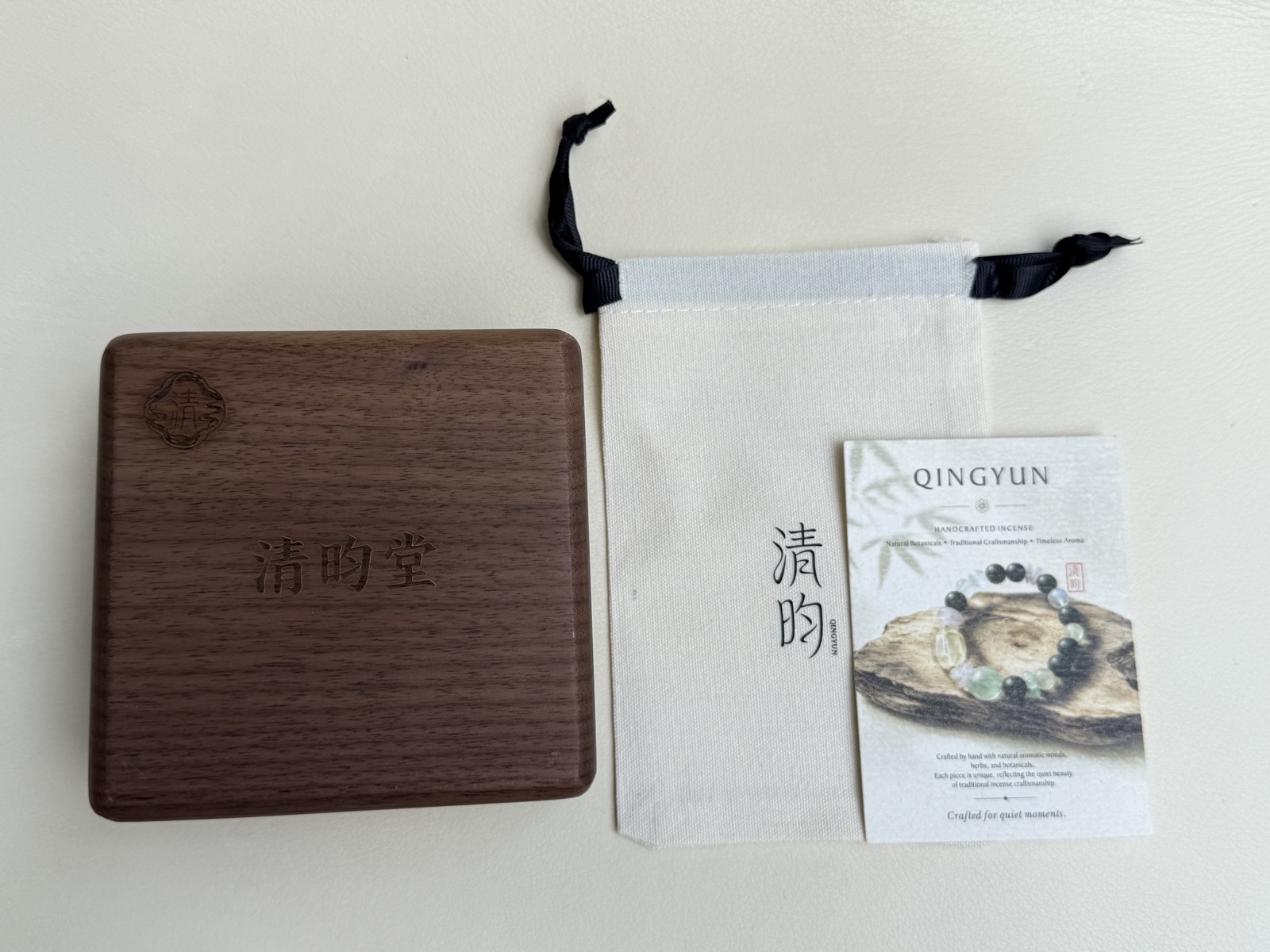
| Material card | Says what the piece is, what it is made of, how to care for it | Yes — your brand |
| Cord / pouch | Secondary containment for jewellery formats | Yes |
| Barcode / UPC label | Retail scanning | Yes — yours or ours |
| Outer carton | Transit protection | Not usually branded |
The card is the part buyers underestimate. On an unfamiliar category, the card is the salesperson: it names the material, states what the piece is not, and gives care instructions in under 40 words. → What the card should say
Why does packaging matter more for incense than for other accessories?
Three reasons specific to this product:
- The product is friable. A pressed bead can chip; a pendant can knock against a box wall. The insert is not decoration.
- The product has a smell. Packaging that traps air will concentrate it; packaging that is too open lets it fade. A sealed inner bag with a desiccant is the standard compromise.
- The product is unfamiliar. On a shelf next to familiar categories, packaging has to explain it. A plain poly bag cannot.
What are the format options?
| Format | Best for | Notes |
|---|---|---|
| Folding carton, printed | Volume, shelf | Cheapest per unit at volume; needs a print run |
| Rigid box | Gifting, premium | Higher per-unit cost; strong unboxing |
| Card-and-bag | Entry price points, markets | Lowest cost; less protection |
| Pouch with header | Hanging displays | Good for charms and small pieces |
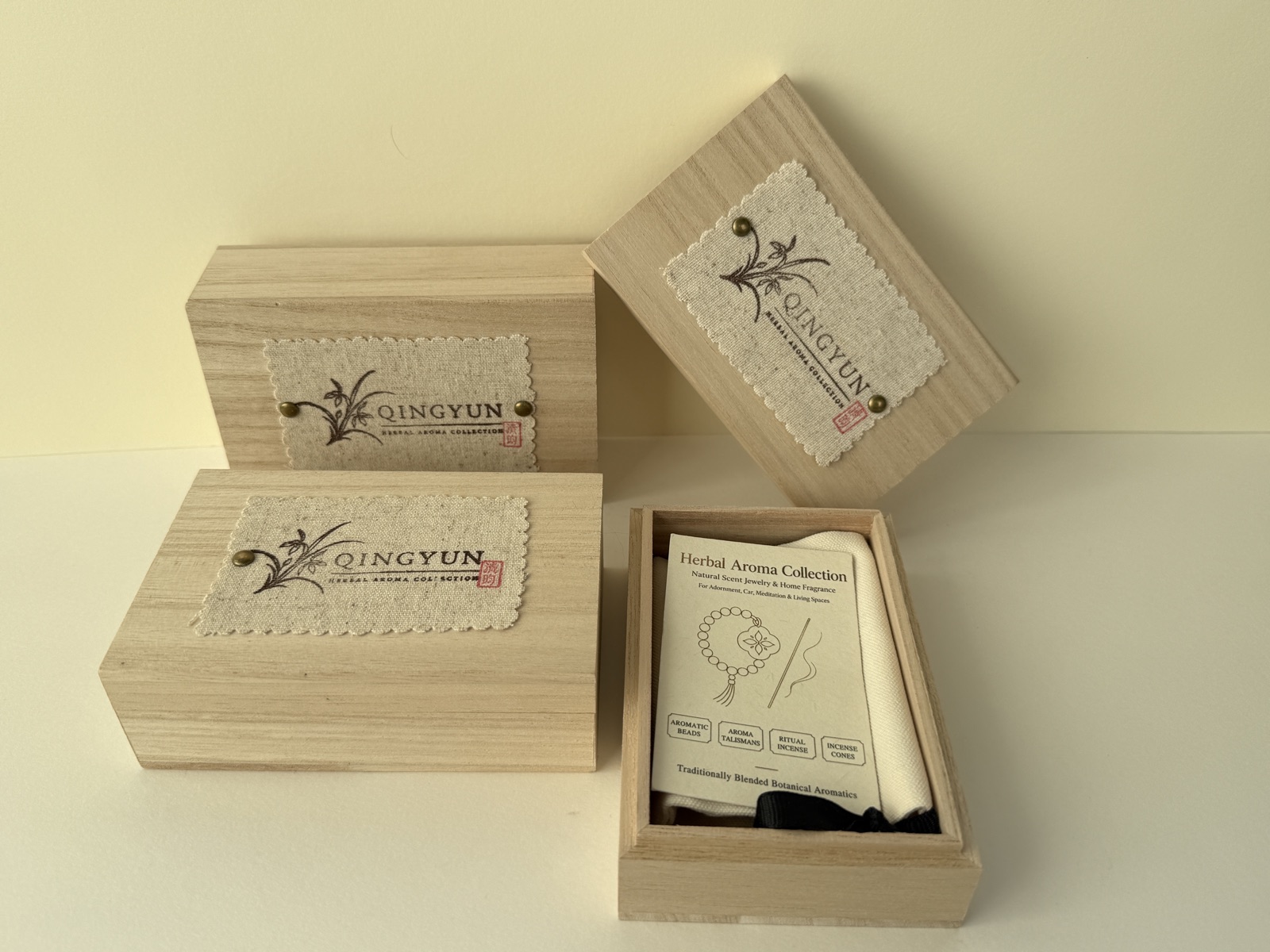
Minimums: printing requires a run, so the per-unit cost falls as volume rises. For a small first order, ask for a stock box with a label or card before committing to a custom print run; the exact threshold is quoted by packaging format and supplier.
Can I put my own brand on it?
Yes, at three levels — the same three as product customization:
- Label only — your label on our stock box. Fastest, lowest minimum.
- Printed box — your artwork, our dieline. One print run.
- Custom structure — new dieline, new insert. Highest minimum, longest lead time.
For all three, you supply print-ready artwork and we supply the dieline. Do not design to a guess: a millimetre of board thickness changes the fold.
Regulatory text on packaging is the buyer’s responsibility in their market. We will print what you approve and we will flag anything that looks like a claim we would not make, but we cannot certify compliance in a country we do not ship to.
What about sustainability claims?
Be careful here, because packaging is where green claims are most often overstated:
- Recycled board is available, and it is a factual statement if the mill certifies it.
- Paperboard components can be described as recyclable where local collection accepts them.
- Wooden boxes are reusable and may be recyclable where a local wood-recovery route accepts them.
- “Plastic-free” is usually false for a retail product — there is almost always a film, a laminate or a cord.
- Film, laminated board and composite films are usually not recyclable through ordinary household collection.
- “Compostable” requires a specific standard and a specific environment; without certification it is a claim, not a fact.
- FSC-certified board is verifiable if you hold the certificate number.
We state the property of each component rather than describing the complete packaging set as recyclable. We would rather print a plain, accurate sentence than a green one we cannot document.
Does packaging affect customs?
One detail does, and it is often missed: solid wood packaging — crates, pallets, dunnage — is subject to ISPM 15 and must be heat-treated and marked. Paper-based retail packaging and engineered wood (MDF, plywood) are not.
That distinction matters if you are consolidating a shipment on pallets. If a forwarder offers “wooden crates” for a small shipment, ask whether they are ISPM 15 marked. For retail cartons shipped by courier, the question does not arise.
How should I specify packaging in an order?
Send these six things, and you will get a quote you can compare:
- Format (folding carton / rigid / card-and-bag / pouch)
- Dimensions, or the product it must hold
- Print: full colour, one colour, or label only
- Board type and finish (matte, soft-touch, uncoated)
- Barcode: yours, ours, or none
- Quantity, and whether the box is reused across SKUs
The last point saves real money: one box across three SKUs cuts the print run and the packing complexity.
Frequently asked questions
Can I ship without retail packaging? Yes — bulk, in inner bags inside a carton. It is cheaper and it is what most wholesale incense arrives as. You will then need to pack it yourself.
Do you apply the barcode? Yes, if you supply the number. We can also ship without one.
Can the box be reused for a different SKU? Yes, and it is the single biggest packaging cost saving available on a small range. Specify one box size across formats where the product allows.
Is the packaging recyclable? Paperboard components can be recycled where locally accepted. Wooden boxes are reusable and may be recyclable where a suitable local recovery route exists. Film, laminated board and composite films are usually not recyclable through ordinary household collection. We identify the components separately rather than describing the complete packaging set as recyclable.
What is the minimum for a printed box? It depends on the print method. Ask for the number against your artwork — it is the first thing that decides whether print makes sense at your volume.
Next steps
- Private label and OEM: three levels of customization
- How to merchandise incense jewelry in a boutique
- Importing incense products: a compliance checklist
Request packaging options with dimensions, minimums and lead time per format. → Request Wholesale Pricing