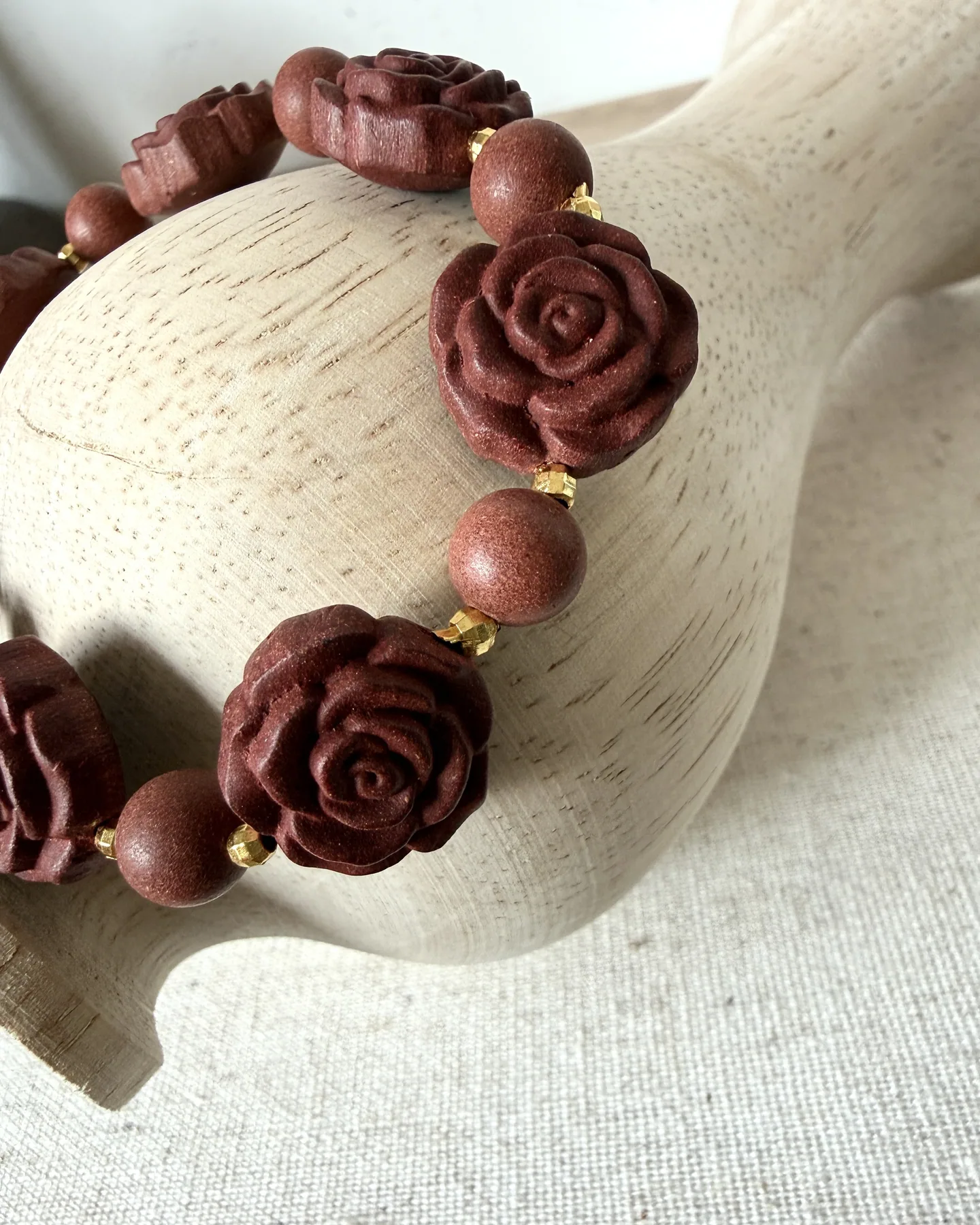
How to Merchandise Incense Jewelry in a Boutique
Sell the material, not the smell. A customer cannot evaluate the scent from 60 cm away, but they can hold the bead, feel its weight and see the layering — so put it in hand, put a card next to it that names the material, and train staff on three sentences. Position it beside incense or vessels, not beside fashion jewellery.
Incense bead jewellery is unusual retail: the product’s defining feature is the one you cannot see. This guide is about making the invisible part legible in a shop.
Where should it go in the store?
Three placements, in order of conversion:
- Beside incense or incense vessels. The context does the explaining: a customer already interested in scent will pick up the bead. This is the highest-converting position in our experience.
- At the counter, in hand-reach. It is a tactile product with a low entry price point relative to jewellery; a shallow dish at the till invites touch.
- With accessories, if you have no incense category. But then the card must do all the work — see below.
Where not to put it: behind glass, in a locked case, or on a wall peg too high to reach. Every one of those removes the only evaluation a customer can perform.
What should the card say?
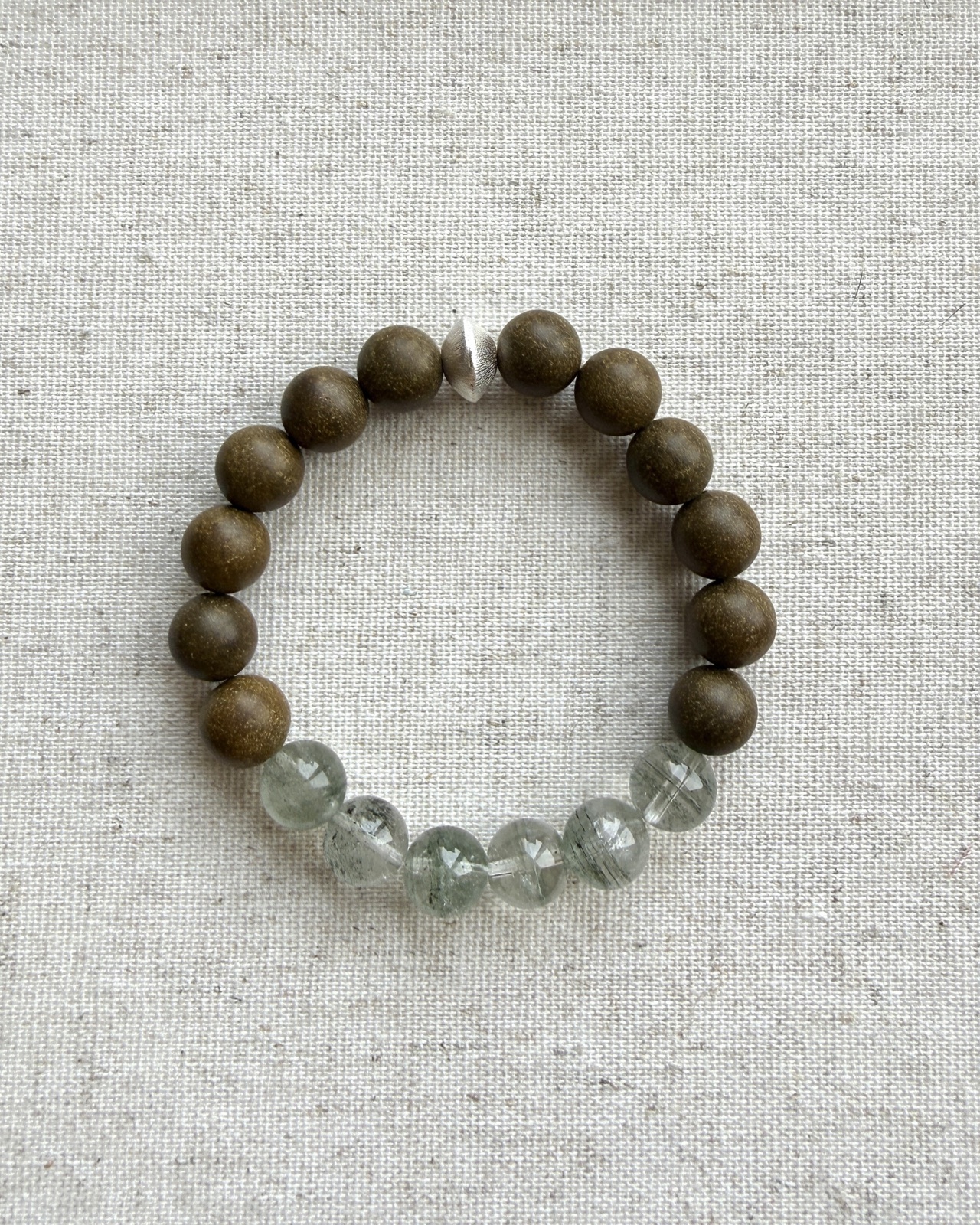
Four pieces of information, in this order:
| Content | Why | |
|---|---|---|
| 1 | What it is: Blended incense bead (合香珠), worn | Most customers have never seen the category |
| 2 | What it is made of: the named botanicals, plus “plant-based binder, no added fragrance oil” | This is the purchase justification |
| 3 | What it is not: not prayer beads, not plastic aroma beads | Prevents the two most common misreadings — and the wrong-price comparison |
| 4 | Price, clearly | Hiding it on an unfamiliar category kills conversion |
Keep it under 40 words. A card that needs reading twice will not be read.
How do you let people smell it?
This is the question every buyer asks, and the answer is: subtly, and close.
- Do not put the product in a sealed jar and expect the scent to sell it. The scent is intimate; a jar makes it smell like nothing or like everything.
- Do put one open sample in a small dish, unworn, at hand height — with a discreet sign: pick up and hold.
- Let the wrist do it. A customer who fastens a bracelet will smell it on their own hand within seconds, because body warmth releases the material. That demonstration sells the product better than any copy.
- Keep a tester. One piece that is allowed to be handled, oiled, and darkened. It will look worn — which is honest, and it is what the product will look like in three months.
How should the three formats be presented?
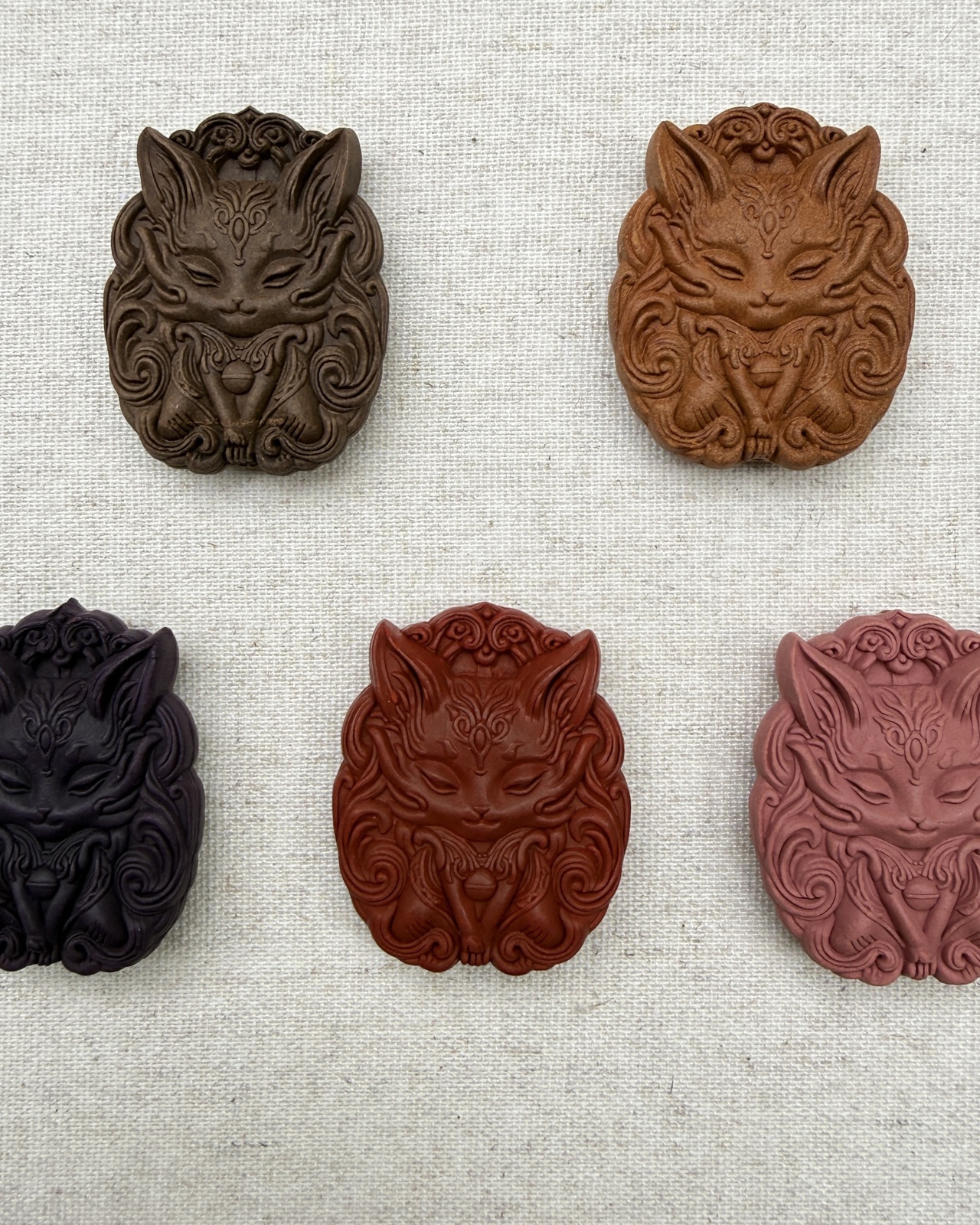
| Format | Entry price | Role in the range |
|---|---|---|
| Single-bead bracelet | Lowest | The trial purchase; the gift |
| Pendant | Mid | The considered purchase; the one people try on |
| Bag charm | Low–mid | The impulse buy, and the male-customer entry point |
Show all three together. The comparison is what teaches the category: same material, three uses, three prices. Presented alone, each looks like an oddity.
How should it sit next to incense?
If you stock sticks or vessels, build a small grouping:
- A vessel with a stick burning at the far end of the display — the atmosphere, and the reason to walk over.
- The beads in the middle, in a shallow dish, in hand-reach.
- A card explaining the link: same material tradition, different form — one is burned, one is worn.
That single sentence is the entire cross-sell. It is also true, which is why it works.
What are the three objections staff should be able to answer?
1. “Is it real?” “It’s a blended incense bead — plant powders pressed and dried, not wood and not plastic. You can see the layering; that’s how it’s built, layer by layer.”
2. “Does it actually smell?” “Close to the skin, yes. It’s not a room fragrance — hold it and you’ll notice it. That’s the point of wearing it.”
3. “How long does it last?” “The scent fades over years, not weeks. It’s the material itself, so there’s nothing to refill — keep it dry and out of direct sun.”
Note what none of these say: nothing about calming, sleep, energy or wellbeing. Staff should not improvise health claims, in any market. If a customer asks whether it helps them relax, the answer is: “I can’t make that claim — what I can tell you is how it’s made and how it wears.”
What about care and returns?
- Give a care card with every sale. Dry, out of direct sun, avoid perfume on the bead, expect colour to deepen with wear.
- Explain the colour change at the point of sale, not after. A customer who is told the bead will darken reads it as patina; one who is not reads it as a defect.
- Check your own returns policy for worn jewellery. Ours is: no returns for change of mind on B2B orders, and damage reported within 7 days of receipt.
Seasonal and gift placement
- Gifting seasons — the bag charm and single-bead bracelet are the gift-price items; box them together.
- Spring and new year — motif-led pieces (magnolia, peony) carry the season without needing a seasonal SKU.
- Do not discount early. This category is story-led; a 30% markdown in week two teaches customers to wait.
Frequently asked questions
How much space does the range need? A shallow dish and one card, roughly 25 × 25 cm, is enough to test the category. Expand only after it sells.
Do I need to stock all three formats? Stock at least two. One format alone does not teach the category, and the price comparison is part of the sale.
Should the tester be for sale? No. Keep one designated tester and replace it when it becomes too dark to represent the product.
What if a customer compares it to a $5 bracelet? That comparison is about material, and the answer is material: this is a pressed botanical formula that took over a dozen steps, not a strung wooden bead. Say it once, without defensiveness, and let them hold it.
Next steps
- Best-selling formats in Western retail
- Retail-ready packaging: our gift box system
- How to order samples and evaluate quality
Request a wholesale quote with the three formats, packaging options and lead times. → Request Wholesale Pricing